

Monthly bookkeeping packages in Rochester should fit a business’s transaction volume, records, and reporting needs. The right fit depends less on a package name than on the work required to keep the books current and useful.
It’s reasonable to want a clear picture of what’s included and how the fee relates to your business. The scope may cover organizing income and expenses, reconciling accounts, and preparing financial reports. Transaction volume and record complexity affect the work involved. This article explains what monthly bookkeeping can include, which business needs influence the scope, and how to assess whether a package suits the way your business operates.
Key Takeaways
- Bookkeeping scope can include account reconciliation, financial records, and tracking money owed to and by your business.
- Transaction volume, record condition, and business complexity shape the bookkeeping work required each month.
- Clear accounts receivable and payable records help keep incoming payments and outgoing bills visible.
- Payroll and expense tracking connect routine bookkeeping with a clearer view of business cash flow.
What Factors Affect Bookkeeping Fees?
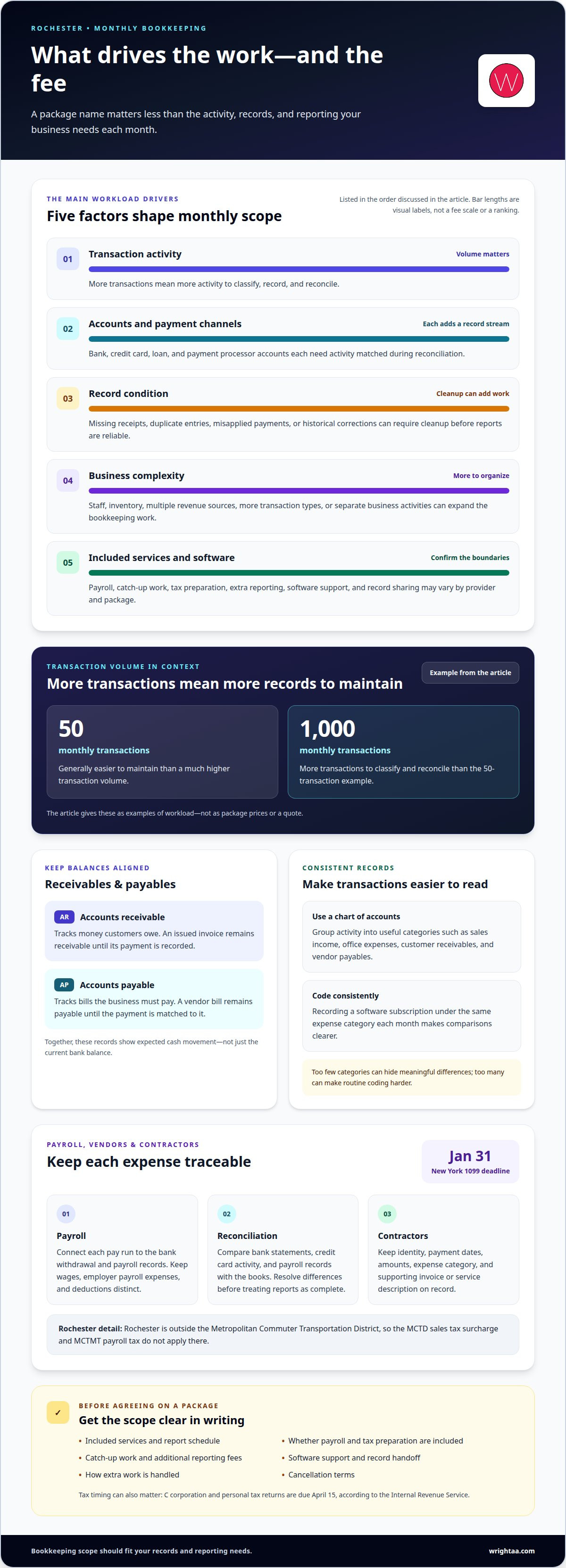
Bookkeeping fees reflect the work needed to keep business records complete and useful. For Rochester owners, transaction activity, record quality, and included services shape the scope.
Small-Business and Freelancer Needs
A Rochester freelancer may have a straightforward flow of client invoices, deposits, and business expenses. A small business with staff, inventory, or several revenue sources needs records organized across more activity. Bookkeeping helps track income and expenses, reconcile accounts, and prepare reports owners can use to understand operations. Choose a scope that matches the records and reporting your business needs.
Business Complexity and Fees
More accounts, payment channels, and transaction types create more work to classify and reconcile. A startup may also need opening balances and a clean structure for recording its first transactions. Complexity can grow when records need correction or several business activities must be reported separately. Tax timing adds another planning consideration: C corporation and personal tax returns are due April 15, according to the Internal Revenue Service.
Package exclusions, extra fees, and cancellation terms belong in the written agreement. It should state whether catch-up work, payroll, tax preparation, or additional reporting falls outside the recurring scope, and explain how extra work and ending the service are handled.
Accounting software support varies by Rochester provider and package. Before hiring, confirm that the provider supports the platform holding your business records, then clarify how records and reports will be shared.
Before hiring a monthly bookkeeper in Rochester, review the service scope, report schedule, record handoff, and cancellation terms. Local small-business resource organizations can also help owners understand startup planning and business operations; bookkeeping needs should reflect the records and activity of the specific business.
Accounts receivable and accounts payable
Accounts receivable tracks money customers owe; accounts payable tracks bills the business must pay. A bookkeeper records invoices, payments, vendor bills, and cleared expenses so each balance reflects actual activity. For example, an issued invoice remains receivable until its payment is recorded. A vendor bill remains payable until the business’s payment is matched to it. These records help owners see expected cash movement, not just the current bank balance.
Transaction volume and account count shape the effort. A business with 50 monthly transactions is generally easier to maintain than one with 1,000 monthly transactions. The number of bank, credit card, loan, and payment processor accounts also affects reconciliation work. Each account creates a separate record stream that must be matched against transactions. Missing receipts, duplicate entries, or payments assigned to the wrong invoice can require cleanup before reports are reliable.
A chart of accounts gives transactions a consistent structure. It groups activity into categories such as sales income, office expenses, customer receivables, and vendor payables. In QuickBooks, for example, recording a software subscription under the same expense category each month makes comparisons clearer. Too few categories can hide meaningful differences; too many can make routine coding harder. The structure should reflect how your business earns and spends money.
Accounting or CPA support becomes useful when outstanding balances no longer match invoices, transactions need historical cleanup, or owners need financial reports interpreted to make a decision. Tax questions and complex entity records can also require professional accounting judgment beyond routine transaction entry. Law firms, for instance, may need accounting tailored to their specialized business records rather than a general expense list.
For firms that need this specialized perspective, law firm accounting can connect routine records with the financial picture behind them. A well-maintained receivables and payables process keeps customer balances, vendor obligations, and account reconciliations aligned, giving business owners a clearer basis for decisions.
Payroll, vendor, and contractor expense tracking
Payroll entries should connect each pay run to the related bank withdrawal and payroll records. For example, bookkeeping records can separate employee wages, employer payroll expenses, and deductions rather than combining them as one expense. Vendor charges also need clear categories: a monthly software bill belongs apart from office supplies. Consistent coding helps owners read expense reports and see where cash is going.
Monthly reconciliation compares the bank statement, credit card activity, and payroll records with transactions in the books. A bookkeeper identifies duplicate charges, missing payments, and amounts that differ from source records, then records supported corrections. If a payroll withdrawal does not match the payroll report, resolve the difference before treating the month’s reports as complete.
Contractor payments need their own records, including the contractor’s identity, payment dates, amounts, and the expense category. In New York, 1099 forms are due January 31. Organized payment records help prepare year-end reporting and distinguish contractor expenses from employee wages. The bookkeeping record should preserve the detail behind each payment, such as an invoice or service description.
New York and Rochester rules can affect which payroll or tax details belong in the records. Rochester is outside the Metropolitan Commuter Transportation District, so the MCTD sales tax surcharge and MCTMT payroll tax do not apply there. Contractor records also support the January 31 1099 deadline, while payroll entries should remain traceable to payroll reports and bank activity.
Payroll and tax support are most useful when payroll records, expense categories, and year-end information need to work together. For example, a bookkeeper can reconcile a payroll withdrawal and classify the expense, while tax preparation uses organized records for reporting. Define whether recurring bookkeeping includes payroll entries, reconciliation, contractor tracking, and year-end document preparation. A clear scope helps keep monthly records aligned with the business’s actual payment activity.
Monthly bookkeeping pricing in Rochester
Monthly pricing reflects the agreed work, not simply a package label. Compare the scope with your transactions, accounts, reporting needs, and any additional services.
Monthly Package Pricing
A monthly package may set a recurring scope for transaction coding, reconciliations, and reports. The fee depends on how much activity needs review, how many accounts require reconciliation, and whether records need cleanup. For example, a business with several payment channels may require more reconciliation work than one with a single operating account. Ask for the scope and fee in a written quote before hiring.
Rochester Firms with Monthly Packages
Rochester bookkeeping firms may offer recurring monthly packages or tailor an engagement to the business. Package names alone don’t show what the work covers. Compare the included tasks, reporting schedule, account coverage, and treatment of cleanup or additional work. Discussing these details helps clarify whether the arrangement fits your operations.
Monthly bookkeeping pricing depends on the business and is provided after a quote request. The main factors are transaction volume, account count, record condition, reporting needs, and whether payroll or other recurring tasks are included. A useful quote explains the work behind the fee rather than presenting a monthly figure without context.
For a clear comparison, outline the records and deliverables in the proposed scope. For example, identify whether the bookkeeper will reconcile bank and card accounts, categorize transactions, and prepare monthly reports. Note any separate work, such as correcting prior periods or adding an account. These distinctions show why two businesses with similar revenue can need different bookkeeping services.
Before a meeting, gather a concise picture of your business activity: the accounts used, the types of transactions, and the reports owners need. This helps define a workable monthly scope without assuming every package includes the same tasks. Discuss your monthly bookkeeping needs to clarify the records and support your business requires.
Wright CPAs: Bookkeeping
Wright CPAs, LLC provides bookkeeping for business owners who need consistent records and useful financial reports. This support can help when transaction activity has grown, account balances need regular reconciliation, or bookkeeping is taking time away from daily operations.
Bookkeeping can work alongside Payroll Services when employee pay records need to connect with business expenses. Tax Planning and Preparation can help when organized financial information needs to support tax work. For owners seeking a broader view of financial performance, CFO Services can bring financial guidance into business decisions.
Start by outlining the accounts, transaction patterns, reporting needs, and related support your business requires. That gives the conversation a practical starting point and helps define a scope suited to your operations.
Contact Wright CPAs, LLC to discuss bookkeeping support for your business.
Set a steady course for your business finances
Choosing monthly bookkeeping packages in Rochester is a practical step toward building a dependable financial routine. Next, consider how that routine should support your business, from keeping records current to preparing for important decisions. A defined scope gives the work a clear shape, while regular communication helps keep records aligned as your needs change.
Wright CPAs, LLC provides Bookkeeping, Payroll Services, and Tax Planning and Preparation. These services can support connected financial tasks, from maintaining business records to organizing payroll information and preparing for tax work. Start with a conversation about your current bookkeeping process and the outcomes you need.
Contact Wright CPAs, LLC about bookkeeping to discuss a thoughtful next step for your business. A sound financial routine can create more clarity for the decisions ahead.
Frequently Asked Questions
Is your bookkeeping service available in Rochester?
Yes. Wright CPAs, LLC serves businesses in Rochester, Buffalo, and Syracuse. Rochester businesses can discuss bookkeeping needs, from routine record maintenance to support that connects bookkeeping with payroll or tax preparation. Describe how your business operates and what financial information you need to use, so the conversation can focus on relevant support.
What Is the Average Cost of Bookkeeping?
There isn’t one average cost that reliably describes every business. The amount depends on the agreed work, such as transaction entry, reporting, or additional financial support. For a useful estimate, describe the services you need and the condition of your records. Wright CPAs, LLC provides pricing after a quote request, based on your business and requested scope.
What Should Be Included in Monthly Bookkeeping?
Monthly bookkeeping should leave a clear record of your business’s financial activity and a useful view of its position. The agreed scope can specify how source documents are handled, how transactions are recorded, and which reports are prepared. For example, an owner monitoring business performance may value reports that distinguish recurring operating costs from one-time purchases.
What do monthly bookkeeping packages cost in Rochester, NY?
The cost of a Rochester package depends on the services and workload defined for the business. Wright CPAs, LLC provides pricing after a quote request. A package may involve bookkeeping alone or a broader combination of related financial support. During a pricing discussion, clarify the reporting deliverables and whether work beyond the recurring scope, such as historical record corrections, is included.
What services are included in monthly bookkeeping packages?
Included services depend on the agreed scope. Bookkeeping may cover maintaining financial records and preparing reports, while payroll support can address payroll records and Form 1099 preparation and filing. Tax Planning and Preparation is a separate offering that may complement organized books. For instance, a business can clarify whether it wants bookkeeping only or connected payroll support as well.
How do Rochester bookkeeping packages differ by business size and transaction volume?
A smaller operation with straightforward income and expenses may need a narrower scope than a business with staff, several revenue streams, or more accounts. The practical difference is the record handling and reporting required. A consultant with client invoices, for example, has different bookkeeping needs from a retailer tracking sales, supplier purchases, and inventory-related activity.


