

Managing startup finances yourself may work at first, but leave little time to plan what comes next. Founders can track spending and handle routine decisions, while financial advisory for startups in Syracuse can help bring cash flow, capital needs, and key business choices into a clearer plan. The goal is not to hand over every decision, but to understand the financial picture behind them.
It’s reasonable to weigh the cost of advice against doing the work in-house. This guide explains how cash management and capital planning fit together, what to consider when choosing financial support, and how counseling appointments work in Syracuse. The Syracuse Financial Empowerment Center is a City of Syracuse program in partnership with United Way of Central New York, located at 980 James Street, Syracuse, New York 13203; according to the City of Syracuse, program contact Alice Liu can be reached at 315-448-8249.
Key Takeaways
- Build a clear view of cash coming in and going out, then use it to identify when the business may need outside capital.
- Decide which financial tasks you can manage internally and where planning support could help you make better-informed decisions.
- Compare advisors by the startup needs they address, their relevant experience, and how they explain their credentials and scope of work.
- Wright CPAs, LLC can support financial operations through Tax Planning and Preparation, Bookkeeping, Payroll Services, and CFO Services.
Business cash management and access to capital
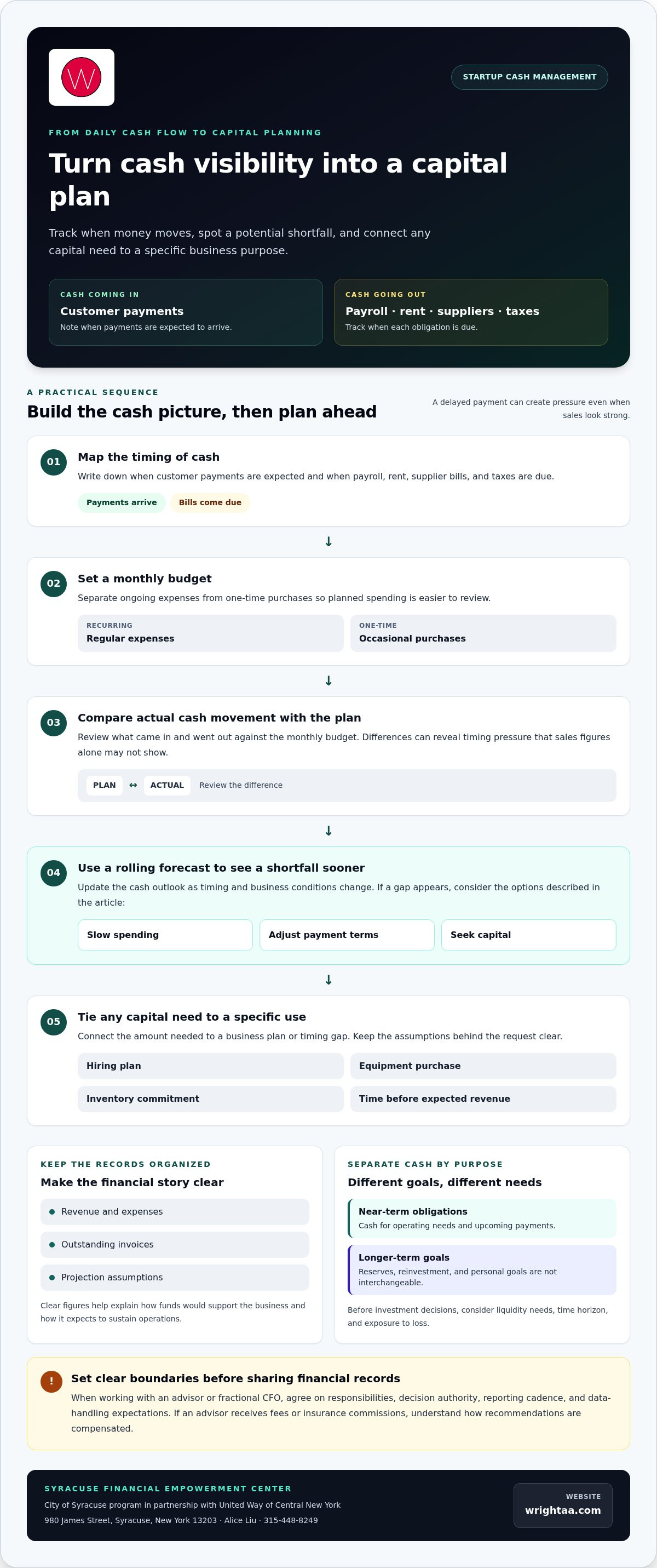
For a Syracuse startup, cash management starts with knowing when customer payments arrive and when payroll, rent, supplier bills, and taxes are due. Build a monthly budget that separates recurring expenses from one-time purchases, then compare actual cash movement with your plan. A delayed customer payment can create pressure even when sales look strong. A rolling cash forecast can help you spot a shortfall early and decide whether to slow spending, adjust payment terms, or seek capital.
Tie capital planning to a specific use. Map the amount needed to a hiring plan, equipment purchase, inventory commitment, or the period before expected revenue arrives. Keep records of revenue, expenses, outstanding invoices, and the assumptions behind projections consistent and organized. Lenders and investors assess different factors, but clear figures help explain how funds would support the business and how it expects to sustain operations. Track cash for near-term obligations separately from resources intended for longer-term goals.
Budgeting also helps founders plan for long-term financial goals. Distinguish business reserves, reinvestment, and personal goals rather than treating every available dollar as interchangeable. Before making investment decisions, consider liquidity needs, time horizon, and exposure to loss. A startup’s operating cash serves a different purpose from money set aside for long-term growth. If an advisor receives fees or insurance commissions, understand how recommendations are compensated.
Hiring an advisor or fractional CFO carries risks, including conflicts of interest, unclear responsibilities, and access to sensitive financial records. Agree on the work, decision authority, reporting cadence, and data-handling expectations before sharing information. The Syracuse Financial Empowerment Center is located at 980 James Street, Syracuse, New York 13203, according to the City of Syracuse. For the City of Syracuse program, Alice Liu can be reached at 315-448-8249. Founders can ask whether any available support addresses personal financial questions alongside business planning.
What financial advisory firms serve startups in Syracuse, NY?
For a Syracuse startup, “financial advisory” can mean several kinds of support. Accounting firms can help organize records, tax planning, and business reporting. Fractional CFOs focus on financial planning, performance analysis, and management decisions. Wealth advisors generally focus on personal assets and investments, which may not address a startup’s bookkeeping or operating needs. Match the firm’s work to the gap you need to fill.
Start with your business’s current stage. A founder preparing to launch may need help shaping budgets and financial processes. A company with regular sales may need clearer reporting, expense controls, and growth planning. A startup considering fundraising may benefit from financial projections and an organized view of its finances. Write down the decisions you need help making before comparing firms. This makes your search more focused than simply looking for startup advice.
Use a short scope checklist when speaking with potential advisors:
- Ask whether the work covers startup operations, personal finances, or both.
- Describe one real task, such as reviewing a forecast before a hiring decision.
- Clarify which records and reports the advisor will prepare or interpret.
- Establish how recommendations, responsibilities, and ongoing communication will be handled.
These distinctions also help founders separate business financial planning from investment management. A startup seeking operating guidance needs advice grounded in cash needs, business records, and growth decisions. A founder seeking personal investment guidance has a different goal. The right fit depends on the work required, not just a firm’s use of “advisory” in its description.
For a practical next step, prepare a concise overview of your business model, current financial questions, and near-term decisions. Then use it to frame a focused conversation about startup financial planning and the support relevant to your situation.
Which Syracuse advisors specialize in startup financial planning, fundraising, or CFO services?
Start with the work your startup needs, since advisory roles solve different problems. A financial planning advisor can help shape budgets, projections, and decisions about when to hire. A fundraising-focused advisor can help prepare financial materials and explain the assumptions behind a capital request. A fractional CFO supports leadership with financial analysis, planning, and recurring management decisions. One firm may cover several areas, but define the scope clearly.
For startup financial planning, ask an advisor to walk through a sample forecast based on your revenue model. A subscription startup, for example, needs to connect expected renewals with staffing and operating costs. A product company may need to model inventory purchases alongside sales timing. Look for a clear explanation of assumptions and scenarios, and how actual results will be compared with the plan.
Fundraising preparation is different from securing capital. An advisor may help organize projections, explain how funds would be used, or make financial records easier to present. Ask which preparation tasks they handle and which decisions remain yours. A useful discussion ties each projection to a specific operating assumption, such as planned hiring or customer acquisition, rather than unsupported growth figures.
To assess CFO support, describe a decision the role should inform, such as whether current cash can support a planned hire. Ask how the advisor would analyze it, what information they need, and which reports they provide. Compare responses for clarity and relevance to your company’s stage. A strong fit explains financial tradeoffs in terms founders can use, not just accounting terminology.
- Match the advisor’s demonstrated work to your immediate planning need.
- Ask for a defined scope, deliverables, and communication rhythm.
- Separate fundraising preparation from promises about obtaining capital.
- Use a real business decision to test the advisor’s approach.
For Syracuse founders, the best-fit advisor is the one whose responsibilities match the work ahead. A forecast, funding presentation, and CFO-level decision support each require different outputs. Define the output first, then compare advisors against that brief.
How can Syracuse startups compare financial advisors and verify credentials?
Compare Syracuse advisors using the same written brief, not just polished proposals. Describe your business stage, immediate decision, and records available for review. Assess how each advisor explains the work, assumptions, and deliverables. For example, ask how they would assess a hiring plan against projected revenue. A specific response reveals more than broad claims about serving startups.
Compare the proposed scope before weighing the relationship. Identify what the advisor will prepare, which decisions remain yours, and how progress will be reported. Ask how additional work beyond the agreed scope is handled. Clarify how the advisor is compensated and what services that compensation covers. These details make proposals easier to compare, since similar titles do not necessarily mean identical work.
- Request a written scope with defined responsibilities and deliverables.
- Ask how recommendations will connect to your business records and goals.
- Discuss communication methods and the expected reporting format.
- Request relevant startup examples without seeking another company’s confidential details.
Verify credentials directly. Ask for the designation’s exact name, issuing organization, and current standing. Use the issuer’s own directory or contact channel to confirm the person’s name and status. Then consider experience separately: a valid designation alone does not establish familiarity with startup planning, fundraising preparation, or CFO work. Ask the advisor to describe relevant assignments and the role they held.
Before choosing, compare the answers side by side. Note whether each advisor explains assumptions plainly, identifies the information needed from your team, and describes how recommendations will support a defined decision. If a proposal uses broad terms such as “strategic guidance,” ask what that means for your startup. Clear boundaries help you understand the work you’re engaging and make it easier to revisit the arrangement as needs change.
Use a focused conversation to explore your startup’s financial planning needs and the support that could address them.
Wright CPAs, LLC: Tax Planning and Preparation
Wright CPAs, LLC helps Syracuse founders bring tax planning and day-to-day financial operations into a more coherent structure. Tax Planning and Preparation supports founders working through business tax decisions, while Bookkeeping helps keep financial records organized. Payroll Services cover recurring payroll tasks, and CFO Services provide financial guidance for business decisions.
Consider this support when records are difficult to interpret, tax planning feels disconnected from business operations, or leadership needs a clearer financial view before making decisions. The right starting point depends on the task at hand, whether that means organizing books, planning for taxes, or improving financial oversight as the business grows.
To discuss your startup’s needs, contact Wright CPAs, LLC or visit wrightaa.com.
Set the next decision in motion
Choose the financial question that most affects your startup’s direction. It may concern readiness for growth, bringing on a financial leader, or using financial information to support decisions. A defined priority gives an advisory conversation a practical starting point and keeps it connected to your company’s actual needs, rather than an abstract idea of what advice should include.
For founders considering financial advisory for startups in Syracuse, progress starts with a clear view of the decision, the context behind it, and the kind of guidance that would be useful. Wright CPAs, LLC can be part of that conversation. Contact Wright CPAs, LLC to discuss where your startup is now and what financial support could help you plan its next stage.
Start with the decision in front of you. A thoughtful next step can help your financial structure grow alongside your business.
Frequently Asked Questions
Fees, schmees, can’t I do this myself?
Founders can handle basic financial tracking themselves, especially while transactions are straightforward. The tradeoff is the time involved and the risk of losing visibility as activity grows. If you’re reconciling accounts late, unsure how a new hire affects cash, or making decisions from outdated reports, outside guidance may help. Keep ownership of decisions, while getting support for analysis or tasks that strain your capacity.
What financial advisory services do Syracuse startups typically need?
Your needs depend on the business stage and the decisions ahead. A founder preparing to hire might prioritize payroll coordination and a forecast that reflects the new role. A company with uneven records may need bookkeeping before useful analysis is possible. As decisions become more complex, CFO-level guidance can help leadership interpret financial information. Financial advisory for startups in Syracuse should match the work required, not just a title.
How much do startup financial advisors in Syracuse charge?
Fees depend on the engagement and its scope, including the records involved, work requested, and frequency of support. A defined tax preparation project differs from ongoing bookkeeping or CFO guidance. Wright CPAs provides these services, with pricing based on the work involved and provided after a quote request. Before proceeding, clarify which tasks, deliverables, and ongoing responsibilities the proposed fee covers.
What tax, accounting, and regulatory issues should Syracuse startups discuss with an advisor?
Discuss how your company’s formation and tax structure affect recordkeeping, owner compensation, and tax planning. If you hire employees, ask how payroll records and reporting will be handled. Describe where the business operates, sells, and keeps records, since these details shape the relevant tax and regulatory questions. Bring formation documents, transaction records, and planned business changes to make the discussion concrete.


