

Real estate experience matters more than a broad list of accounting services. A CPA for real estate agents in Rochester should understand how commission income, business expenses, and uneven cash flow affect an agent’s finances. Look for someone who connects tax preparation and planning with bookkeeping and practical financial guidance.
It makes sense to want more than a return prepared once a year. Organized records and thoughtful planning help you understand the business behind each transaction and make informed decisions as income and expenses change.
This guide explains what to assess when choosing a Rochester CPA, from accounting and tax services to real estate experience and referrals. You’ll also learn when ongoing financial management may help and what to consider when choosing support that fits the way you work.
Key Takeaways
- Assess whether accounting support connects tax preparation with bookkeeping, cash flow, and financial planning for your business.
- Use referrals and online reviews to gauge how well a CPA communicates and supports clients through different business conditions.
- Look for practical real estate experience, including familiarity with commission-based income and the financial patterns of an agent’s work.
- Match the support you need to the right service, from tax planning and preparation to bookkeeping, payroll, or CFO guidance.
Accounting, financial management, and tax services
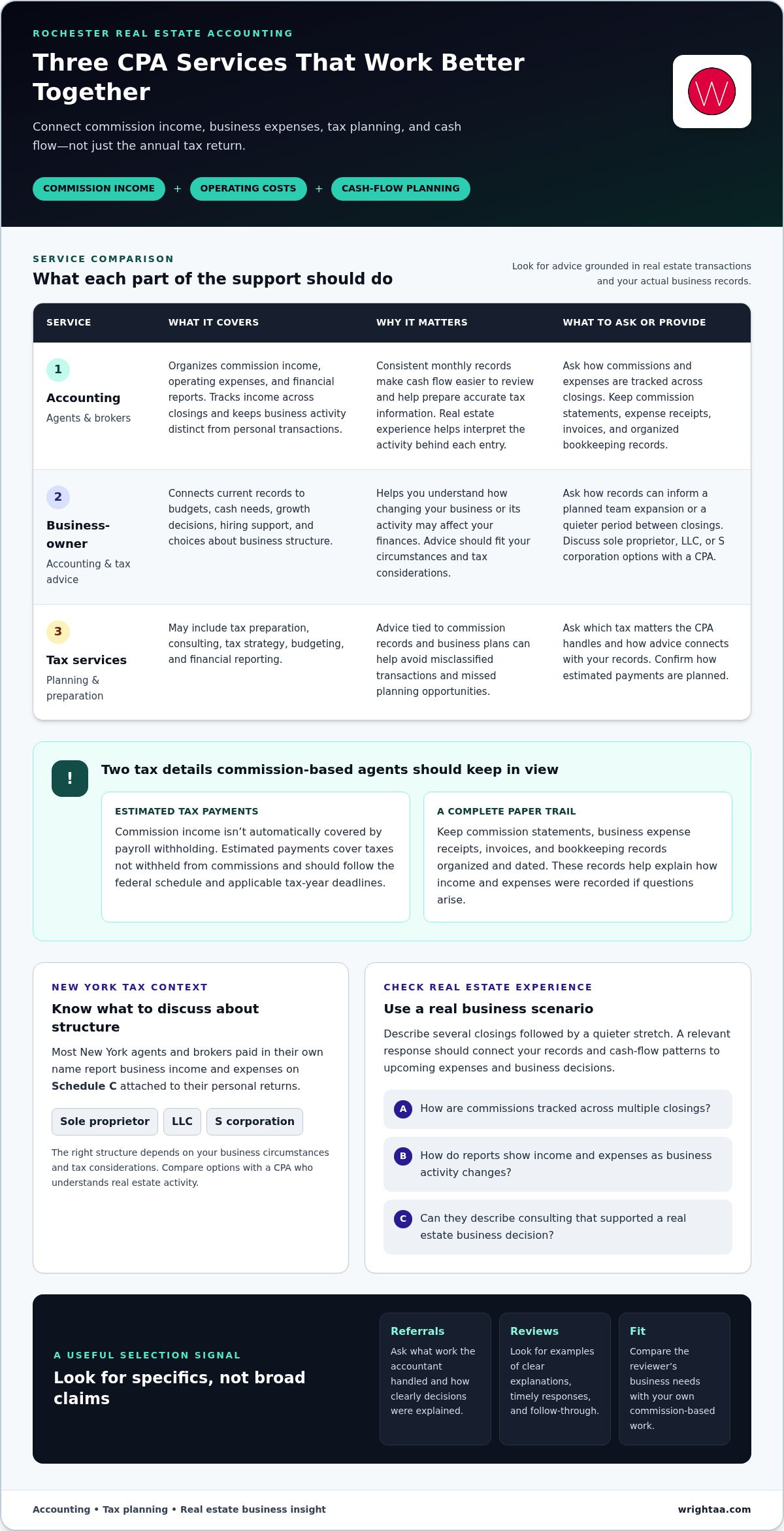
For Rochester agents, useful accounting connects commission income, business costs, tax planning, and cash flow. Choose a professional who understands real estate transactions and can explain how each service supports your business.
Accounting for Agents and Brokers
Accounting for agents and brokers should organize commission income, operating expenses, and financial reports consistently. Ask how the accountant separates business activity from personal transactions and tracks income across closings. Monthly records of commissions and expenses make it easier to review cash flow and prepare accurate tax information. Real estate experience helps an accountant understand the activity behind those entries.
Business-Owner Accounting and Tax Advice
Business-owner advice connects current records with decisions about growth. An accountant can help you review budgets, plan for cash needs, and understand how hiring support or changing your business structure may affect your finances. Most New York agents and brokers paid in their own name report business income and expenses on Schedule C attached to their personal returns. Agents and brokers should also consider whether an LLC or S corporation fits their circumstances.
Should you operate as a sole proprietor, LLC, or S corporation? The appropriate structure depends on your business circumstances and tax considerations. Compare the options with a CPA who understands real estate activity before making a change.
Tax Services for Real Estate Agents
Tax services may include preparation, consulting, tax strategy, budgeting, and financial reporting. Ask which tax matters the CPA handles and how advice connects with your commission records and business plans. A preparer unfamiliar with real estate commissions and expenses may overlook relevant details or misclassify transactions, leading to inaccurate records or missed planning opportunities.
How do estimated tax payments work? Estimated payments cover taxes not withheld from commission income. Plan payments according to the federal schedule and applicable tax-year deadlines. Commissions aren’t automatically covered by payroll withholding.
What records should you keep? Keep commission statements, business expense receipts, invoices, and organized bookkeeping records. A complete, dated paper trail helps explain how income and expenses were recorded if questions arise.
Referrals, reviews, and professional experience
References and public reviews can show how an accountant works beyond the first meeting. For a Rochester agent, look for feedback about clear communication, careful follow-through, and useful explanations of tax planning. Specific examples are more informative than brief praise because they show how the professional handled a real business need.
Experience in real estate is especially relevant when income comes from commissions and business conditions shift. Sean Sherman has worked in public accounting since 2005 and has experience in real estate, construction, manufacturing, retail, and restaurants. That range offers useful context for evaluating whether an accountant can understand your work and adapt advice to different business situations.
Use referrals and online reviews as evidence, not a substitute for a direct conversation. Ask a referring agent what work the accountant handled, how clearly they explained decisions, and whether the support remained useful as the business changed. Compare those details with the services and experience described in reviews.
- Look for positive feedback that describes a specific accounting or tax-planning experience.
- Notice whether reviews mention clear explanations, timely responses, and consistent follow-through.
- Compare the reviewer’s business needs with your own, such as commission income or changing activity.
Ask about the accountant’s experience and the range of business situations they have handled. Time in practice can bring exposure to changing conditions, but the important question is how that experience informs advice today. Ask how they help business owners plan for taxes when income or expenses change.
For a more deliberate conversation about how tax planning fits your business decisions, explore tax planning services. A focused discussion can help you assess whether the approach matches your records, goals, and real estate work.
Real estate industry specialization
Real estate experience shapes how an accountant reads an agent’s business. In Rochester, commissions may arrive irregularly while operating costs continue between closings. A specialist understands how timing affects budgets and cash flow. A CPA for real estate agents in Rochester should explain how those patterns influence financial decisions, not rely on a general claim of industry knowledge.
Test expertise with a practical scenario. Describe a period with several closings followed by a quieter stretch, then ask how the CPA would help interpret your records and plan for upcoming expenses. The response should connect accounting insights to business decisions. Clear, relevant reasoning can show whether a CPA for real estate agents in Rochester understands the financial rhythms of your work.
Specialization also means understanding how different real estate businesses operate. An independent agent, a broker overseeing a team, and a property owner may have different accounting questions. Ask which types of clients the accountant has served and what work they handled. A specific example offers more insight than a broad statement about serving real estate clients.
- Ask how the CPA tracks commissions across multiple closings.
- Discuss how reports show income and expenses across changing business periods.
- Request an example of consulting that supported a real estate business decision.
Look for advice that fits your business. If you plan to expand a team, ask how financial records can help assess added operating demands. If your business changes, ask how the CPA reviews assumptions and adjusts guidance. Look for sound analysis, not a formula applied to every agent.
Rochester context matters, but local familiarity alone doesn’t establish real estate expertise. Consider how well the accountant understands your role, transaction flow, and goals. A useful conversation should clarify what your accounting can reveal, which questions need attention, and how consulting can inform your next business decision.
Which Rochester, NY CPAs specialize in real estate?
For Rochester agents, look for a CPA with real estate experience, not only general tax preparation experience. Assess the professional examples below and match that background to your work, business structure, and need for ongoing financial guidance.
David G. Young has more than 35 years of experience advising business owners, executives, and high-net-worth individuals. Julie A. Young has over 15 years of public accounting experience and became a partner in 2010. Those details indicate depth in public accounting and business advice. Ask how that experience applies to commission-based businesses and real estate transactions.
Sean Sherman has worked in public accounting since 2005 and has real estate industry experience. His background also includes construction, manufacturing, retail, and restaurants. For an agent, the relevant question is how that work informs practical accounting decisions. Ask for an example involving a real estate client’s business needs, rather than relying only on a list of industries.
- Confirm the professional’s real estate experience and role in the work.
- Ask how their advice reflects the difference between an agent and a property owner.
- Compare their tax and accounting expertise with the decisions you need to make.
A local office address alone doesn’t demonstrate specialization. Evaluate how the CPA serves Rochester clients and whether their experience fits your business activity. An agent focused on sales, for example, may need different guidance from a broker managing a team. Ask how the accountant adapts reporting and advice to those distinct operations.
Use a first conversation to assess the fit. Explain how you earn income, how your business is organized, and which decisions are ahead. Listen for clear, relevant reasoning. A suitable professional should connect experience to your circumstances, explain the accounting implications, and identify useful next steps without relying on generic assurances.
Wright CPAs: Tax Planning and Preparation
Wright CPAs, LLC helps Rochester real estate agents connect tax preparation with the financial records behind their business. Tax Planning and Preparation addresses tax needs, while Bookkeeping supports organized income and expense records. Payroll Services can support agents with employees, and CFO Services provide financial guidance as the business develops.
Consider this support when commissions, business expenses, or payroll make financial administration harder to manage alone. Consistent records give tax preparation a clearer foundation, while financial guidance helps you review cash flow and business decisions. The right combination depends on how your real estate business operates and the support you need.
To discuss accounting and tax support for your business, contact Wright CPAs, LLC.
Build a Clearer Financial Path for Your Business
Start by identifying the financial decision that needs the clearest attention. You might be planning a change in business structure, looking for better cash flow visibility, or preparing for growth. Beginning with one concrete priority keeps the conversation practical and focused on your goals.
A CPA for real estate agents in Rochester should connect financial guidance with the realities of your work. Choose support that helps you make informed decisions as your business changes, not just organize information afterward. The right working relationship can bring more structure to the decisions ahead.
If you’re ready to discuss your accounting needs, contact Wright CPAs. A thoughtful first conversation can help you take the next step with greater clarity.
Frequently Asked Questions
Which tax deductions can real estate agents claim, including mileage, marketing, and home office expenses?
Mileage, marketing, and home-office costs are categories agents can review for potential business deductions. Keep trip records with dates, destinations, and business purpose; save advertising invoices; and document how you use a workspace. For example, distinguish client-related travel from personal errands. Deductibility depends on applicable tax rules and the facts behind each expense, so organized records support accurate reporting.
How do New York State and local taxes affect Rochester real estate agents?
Rochester agents may need to consider federal, New York State, and applicable local tax responsibilities. Which obligations apply depends on factors such as where you live, how your business is organized, and where you earn income. Keep business and personal records separate, and note changes in residence or business activity. A CPA familiar with New York tax matters can help relate those details to your filing needs.
How can real estate agents compare and verify Rochester CPA credentials and experience?
Compare credentials, real estate experience, and how clearly each CPA answers your questions. Ask for the professional’s full name and license details, then verify the credential through the appropriate New York State licensing authority. Discuss a practical scenario, such as commission income alongside advertising expenses, and see whether the explanation is specific and understandable. Referrals and detailed reviews can add context about communication and follow-through.
Should a Rochester real estate agent operate as a sole proprietor, LLC, or S corporation for taxes?
The appropriate structure depends on your business circumstances and tax considerations. Most New York agents paid in their own name report business income and expenses on Schedule C. Before changing your structure, compare sole proprietorship, LLC, and S corporation options with a CPA familiar with real estate.


