

For a chiropractic practice, choosing a CPA is also a business-structure decision: tax treatment, owner compensation, payroll, and profit distributions need to fit together. A properly managed LLC or PLLC with an S-corporation election can save a chiropractic practice $8,000-$30,000 per year. A CPA for chiropractors in Rochester can help assess that structure alongside the practice’s finances and tax position.
It’s reasonable to want more than a tax return. You need a clear view of how patient and insurance payments move through the business, which operating costs may qualify as deductions, and whether your current structure still suits the way you work. This guide explains how to evaluate advisory services, identify chiropractic business deductions, and understand how entity choices shape tax and payroll decisions. It also covers financial signals worth watching, from receivables and cash flow to operating costs, so your next decision reflects the practice you actually run.
Key Takeaways
- Look for advisory support that connects bookkeeping, cash flow, payroll, and financial reporting to the daily needs of a chiropractic practice.
- Organize records for practice expenses and equipment so potentially eligible business deductions can be assessed accurately.
- Review how your business structure affects tax treatment, owner compensation, and payroll before deciding whether it still fits the practice.
- Compare CPA credentials, review patterns, and healthcare-business experience to find support aligned with your practice’s financial needs.
Choosing an accountant and evaluating advisory services
Choose accounting support that connects patient billing, bookkeeping, payroll, and financial decisions. For a Rochester practice, look for advisory work that turns financial records into specific, useful next steps.
Firm Scope and Practice Fit
Local, regional, and national firms can each serve chiropractic practices, startups, and solo practitioners. Compare the actual work proposed: monthly bookkeeping, payroll coordination, cash flow review, and guidance on practice performance. Ask how the accounting process handles patient payments and insurance reimbursements together. A solo practice may need straightforward reporting, while a startup may need setup guidance and a financial strategy that can develop with the business.
Credentials, Reviews, and Healthcare Expertise
Compare Rochester CPAs by checking credentials, review patterns, and relevant healthcare experience. Read reviews for recurring details about responsiveness, clear reporting, and useful advisory conversations, rather than relying on a single rating. Ask how the CPA analyzes a clinic’s accounts receivable, staffing costs, and operating expenses. A useful advisory review explains what changed, what the numbers indicate, and which next step could improve profit or support success.
New York and federal tax treatment depends on the practice’s business structure, income, payroll, and transactions. A CPA can review those factors and assess sales-tax questions based on the practice’s actual activities, rather than assuming every chiropractic practice has the same tax obligations.
Gather bank and credit-card statements, bookkeeping files, payroll records, tax returns, expense receipts, and patient-billing and insurance-reimbursement reports. Include an accounts-receivable aging report so the CPA can trace balances from service through collection.
Accounting support can help identify payroll inconsistencies, review sales-tax treatment, and organize records for tax reporting. For example, matching payroll reports to the books can uncover entries that need attention before they distort the practice’s financial picture.
Yes. A Rochester CPA can support a chiropractic startup or solo practitioner by organizing initial records, setting up bookkeeping workflows, and tailoring reporting to the practice’s size and structure.
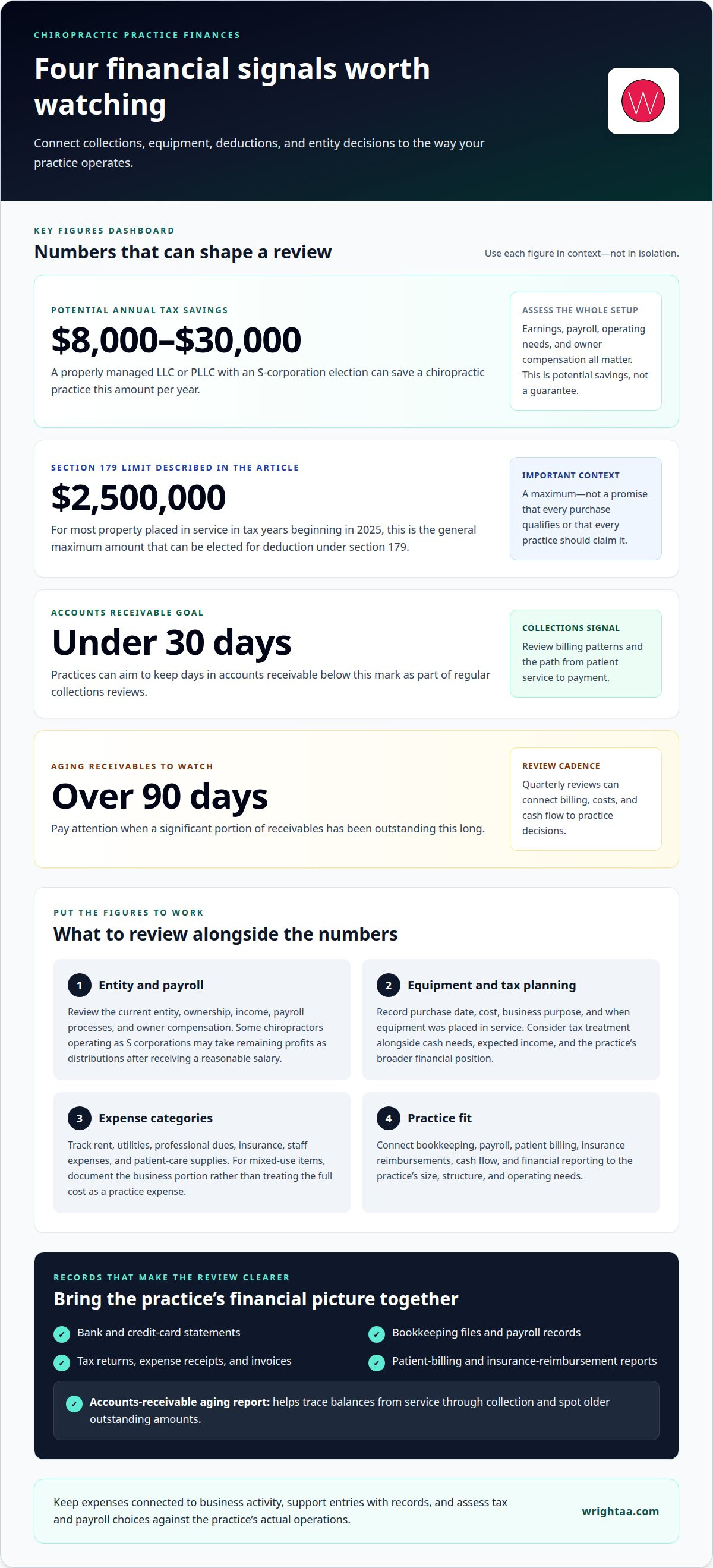
Collections deserve a regular place in advisory reviews. Practices can aim to keep days in accounts receivable under 30, and should pay attention when a significant portion of receivables is more than 90 days old. Quarterly reviews help connect billing patterns, costs, and cash flow to decisions about the practice.
Chiropractic business deductions
For a chiropractic practice, deduction planning starts with a clear connection between each expense and business activity. Keep practice purchases separate from personal spending, and organize receipts, invoices, and payment records. For example, document the purchase and business use of a treatment table, office supplies, or software. Consistent bookkeeping gives owners a reliable record for tax preparation.
Equipment deserves particular attention because purchase timing and tax treatment can affect the year’s reported income. According to the Internal Revenue Service, the total amount you can elect to deduct under section 179 for most property placed in service in tax years beginning in 2025 generally cannot be more than $2,500,000. This is a maximum, not a promise that every purchase qualifies or that every practice should claim it.
Organize equipment records by purchase date, cost, business purpose, and when the item was placed in service. This helps distinguish a diagnostic device from routine repairs or replacement supplies. Before a major purchase, tax planning can weigh available tax treatment against cash needs, expected income, and the practice’s broader financial strategy. The right approach considers both the tax return and the practice’s overall financial position.
Other costs also need consistent classification. Track rent, utilities, professional dues, insurance, staff expenses, and patient-care supplies in clear categories. For mixed-use items, keep records showing the business portion rather than treating the full cost as a practice expense. Clear records make unusual or large expenses easier to explain than vague descriptions do.
Build a repeatable process: record transactions promptly, retain supporting documents, and review expense categories before tax preparation. Reconcile equipment purchases to invoices and payment records, then flag items needing tax analysis. This method helps healthcare owners identify missed documentation without assuming every cost qualifies. For a steadier recordkeeping foundation, chiropractic bookkeeping support can bring expense tracking into a consistent workflow.
CPA services for chiropractic business structures
A chiropractic clinic’s business structure affects tax planning, payroll, and how owners manage payments. A CPA can review the current entity, ownership, income, and payroll processes before developing a tax strategy. This helps business owners understand how choices affect cash flow and compliance, and whether the structure still fits the clinic’s operations.
A properly managed LLC or PLLC with an S-corporation election can save a chiropractic practice $8,000-$30,000 per year. The structure needs ongoing attention, not just an election on paper. A CPA evaluates the practice’s earnings, payroll setup, and operating needs when assessing whether this approach fits. The resulting analysis should explain how the entity affects reporting and how the practice will handle owner compensation.
Some chiropractors operate as S corporations and may take remaining profits as distributions after receiving a reasonable salary. This connects entity planning with payroll administration. A CPA can coordinate salary records with the business’s financials and tax preparation, so the books reflect how money moves. Clear documentation also helps owners understand how compensation and distributions affect available cash.
Worker classification needs similar care. The IRS may classify an associate chiropractor as a W-2 employee rather than a 1099 independent contractor when the practice controls the associate’s schedule, equipment, and patient treatment. A CPA can review those working arrangements with the clinic’s payroll records and identify where classification questions affect payroll compliance. The contract label alone does not describe those day-to-day facts.
Useful advisory work follows a clear sequence: review entity documents, examine ownership and payment flows, assess payroll practices, then consider tax consequences. For a new clinic, business formation support can help establish an accounting foundation. For an established practice, tax planning can connect the chosen structure to current operations. This makes the strategy practical and easier to revisit as the business changes.
How do Rochester CPAs compare on reviews, credentials, and healthcare expertise?
Compare Rochester CPAs by looking at credentials, communication, and experience with professional service businesses. Review the qualifications each professional lists, then find out who will handle your account and explain financial decisions. A polished firm profile matters less than clear answers about bookkeeping, tax planning, and advisory support. A chiropractor’s needs, for example, differ from those of a retail business without patient billing.
Reviews can reveal patterns in communication and follow-through. Read several comments, not only the highest-rated ones, and look for details about clear reports or useful planning discussions. A review describing help with a complicated payroll issue may be more relevant than general praise. Treat testimonials as one perspective, then compare them with the firm’s process and the questions it asks about your practice.
Healthcare expertise should show up in the details. A CPA familiar with medical practices can discuss insurance reimbursements, patient balances, payroll, and expense classification in practical terms. Notice whether the conversation distinguishes billed charges from collected payments, or explains how aging receivables affect cash flow. These examples demonstrate whether the advice connects financial records to chiropractic operations, rather than relying on generic small-business language.
Use a consistent comparison method. Record each firm’s listed credentials, healthcare experience, review themes, communication approach, and scope of advisory support. Then compare how each explains a sample issue, such as an unexpected rise in payroll costs or delayed insurer payments. The strongest fit is the one whose reasoning is clear, specific to your clinic, and tied to decisions you need to make. A CPA for chiropractors in Rochester should make that connection visible.
Wright CPAs can help translate practice records into tax and financial guidance. Discuss your chiropractic practice’s accounting needs when you’re ready to connect the details with your next business decision.
Wright CPAs: Payroll Services
Wright CPAs provides payroll solutions for chiropractic practices managing staff pay alongside patient and insurance payments. When payroll records feel disconnected from bookkeeping or tax preparation, coordinated support can bring those details into a clearer financial picture. Payroll information can also inform tax planning and help owners understand how staffing costs affect cash flow.
Consider payroll support when setting up staff processes, changing how the practice manages payroll, or bringing payroll records into a consistent accounting workflow. Wright CPAs also offers bookkeeping, tax planning and preparation, and CFO services, connecting day-to-day records with broader financial decisions.
Contact Wright CPAs to discuss payroll support for your chiropractic practice.
Set a Clear Direction for Your Practice
Your practice’s finances should support the care you provide and the decisions ahead. As staffing, patient volume, and business priorities shift, a CPA for chiropractors in Rochester can help align financial processes with the way your clinic operates. Start by identifying the questions that matter most now, whether they concern payroll workflows, clear records, or planning for a change in the practice.
Wright CPAs brings Tax Planning and Preparation, Bookkeeping, and Payroll Services into the conversation, helping connect day-to-day financial information with thoughtful business decisions. Begin with the issue that feels most immediate, then build from there. Contact Wright CPAs to discuss support for your practice and take a considered next step.
Frequently Asked Questions
Which CPAs in Rochester, NY specialize in chiropractors or medical practices?
Wright CPAs, LLC serves chiropractors and other professional service providers, including physicians, dentists, and veterinarians. The firm provides tax, accounting, and CFO services for business owners. That makes it relevant to Rochester chiropractic practices seeking financial support tailored to professional service businesses. Its work can be shaped around each practice’s operations.
What accounting and tax services do Rochester CPAs offer chiropractors?
Rochester CPAs may provide tax preparation and planning, bookkeeping, payroll, and financial guidance. Wright CPAs, LLC offers these services alongside customized financial reporting and cash flow management. Organized books, for example, can help a practice understand how payroll, equipment purchases, and insurer payments affect its financial picture. The right mix depends on whether the immediate need is accurate records, tax planning, or clearer business decisions.
Which Rochester CPA firms have experience with chiropractic practice tax planning?
Wright CPAs, LLC works with chiropractors and provides proactive tax strategy and comprehensive tax planning. Its clients also include other medical professionals and service businesses. For a clinic considering a major purchase or a change in its operating structure, tax planning can connect the decision with the practice’s records and financial outlook. This can suit chiropractors seeking tax guidance alongside ongoing accounting support.
What tax deductions and credits can chiropractic practices claim in New York?
Potential deductions depend on the practice’s expenses, business use, records, and applicable tax rules; credits depend on eligibility for specific programs. Examples to review include documented costs for supplies, rent, staff, and equipment. A tax professional can assess each expense and whether a credit applies to the practice’s circumstances. Keep invoices and payment records organized so each item’s purpose and business connection are clear.
How can a chiropractor evaluate and choose a CPA in Rochester?
Choose a CPA by assessing credentials, experience with professional practices, communication, and scope of support. A CPA for chiropractors in Rochester should explain how tax planning connects with bookkeeping and business decisions. In an introductory discussion, describe a current concern, such as unclear financial reports or a planned practice change. Notice whether the response is specific, understandable, and relevant to your clinic.


