

Starting a retail business takes more than setting up a storefront; accounting needs a solid foundation, too. Accounting for retail stores in Rochester depends on the systems already in place, the complexity of inventory and sales records, and whether the business needs bookkeeping, payroll, or broader financial guidance. Initial setup and ongoing support are separate parts of the work.
It’s reasonable to want a clear picture before committing money to a new venture. The useful first step is to separate one-time setup work, such as organizing records and connecting sales data, from recurring accounting support. This guide explains what can shape those costs, what ongoing support may cover, and how to compare Rochester firms by the work they’ll handle and the financial insight they provide. With those pieces in view, you can plan for accounting as part of the store’s operating structure, not as an afterthought.
Key Takeaways
- Separate one-time accounting setup from ongoing support, then map each to your store’s sales systems, inventory records, and payroll needs.
- Understand how bookkeeping keeps transactions current while accounting turns those records into reports that help you assess performance.
- Compare firms by the scope of their support, how they handle retail records, and whether their reporting fits the decisions you need to make.
- Use the article’s pricing factors to prepare for a focused conversation about the accounting support your store needs now and as it grows.
Outsourced accounting and bookkeeping support
Outsourced support can organize transaction records, inventory activity, and payroll data. The right division of work depends on what the store already tracks internally and what the owner needs help managing.
Sales Tax and Filing Requirements
For a Rochester retailer, sales tax bookkeeping should separate sales by product category and transaction location. Track tax collected alongside sales, then use the business’s assigned filing schedule to plan submissions and payments. Set the point-of-sale system to reflect Monroe County’s applicable rate, and keep transaction records aligned with that setting. Filing requirements depend on the store’s tax accounts and business structure, so build the calendar from its official notices.
Inventory Accounting and Cost of Goods Sold
Inventory accounting connects purchases, stock on hand, and sales to the cost of goods sold. Choose a consistent method that fits how the store buys and tracks merchandise, then apply it to categories such as apparel, gifts, or household goods. Compare recorded stock with physical counts and investigate differences. This gives the owner a clearer view of how product costs relate to sales and reported profit.
Outsourced bookkeeping records daily activity, including sales, supplier invoices, deposits, and payroll entries. A monthly handoff can keep records organized without transferring every internal task. Retail accounting support can also turn those records into reports and help identify missing receipts or unmatched deposits.
Choose accounting software by matching its functions to the store’s sales and inventory workflow. Confirm that it can export useful transaction detail, track product categories, and support reconciliation. A shop with in-person and online sales, for example, needs a clear way to bring both channels into its books.
Internal oversight still matters. Assign a staff member to review reconciliations, approve access, and flag unusual entries each month. The Internal Revenue Service says an electronic accounting or point-of-sale system must provide a complete and accurate record of business data accessible to the IRS.
For point-of-sale integration, match sales totals, returns, payment fees, and deposits across systems. A Rochester store can compare its daily point-of-sale summary with bank activity, then resolve differences before the month closes.
Monthly accounting and financial statements
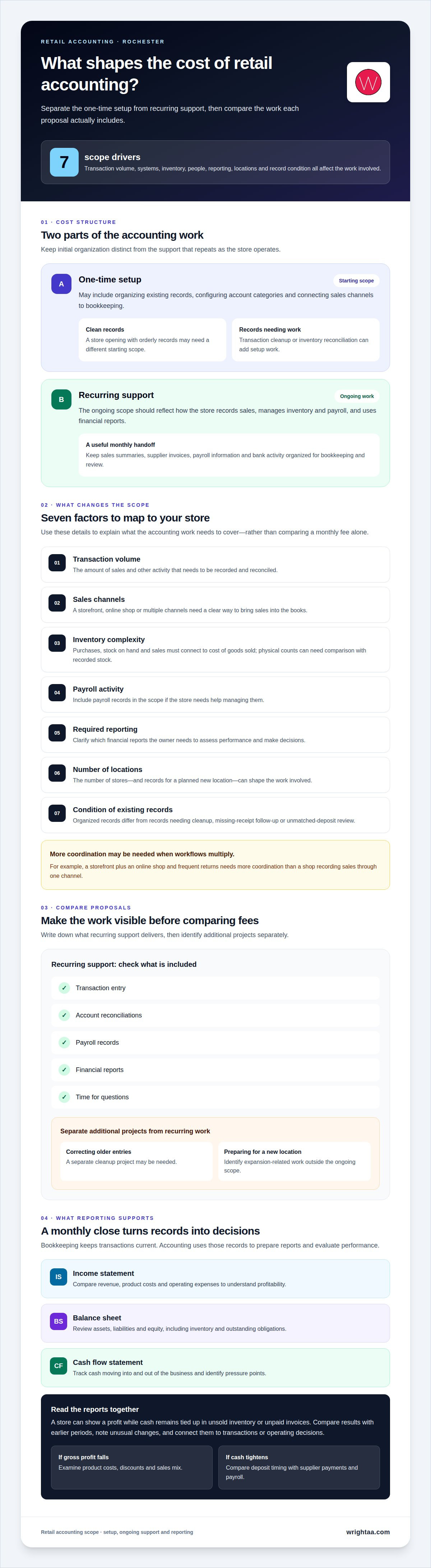
A monthly close turns sales and expenses into a useful view of the store’s financial position. Bookkeeping records transactions and keeps financial records current; accounting uses those records to prepare reports and evaluate performance. For a retailer, the value comes from connecting each report to decisions about purchasing, staffing, and cash.
The close begins by reconciling sales and payment deposits, reviewing expenses, and recording relevant adjustments. Then prepare financial statements that show different aspects of the business:
- Income statement: Compare revenue, product costs, and operating expenses to understand profitability.
- Balance sheet: Review assets, liabilities, and equity, including inventory and outstanding obligations.
- Cash flow statement: Track cash moving into and out of the business, and identify pressure points.
Use the reports together. A store can show a profit while cash remains tied up in unsold inventory or unpaid invoices. Comparing current results with earlier periods can reveal whether changes in sales, purchasing decisions, or expenses are affecting the store’s financial position. Current reports help owners monitor performance, while organized records can reduce year-end cleanup.
For a useful monthly review, note unusual changes and connect each one to a transaction or operating decision. If gross profit falls, examine product costs, discounts, and sales mix. If cash tightens, compare deposit timing with supplier payments and payroll. These checks make reporting useful for financial and strategic decisions, not just recordkeeping.
Keep source documents and account reconciliations organized as the month closes. That preparation supports later tax preparation and makes questions about a transaction easier to resolve. A store planning a new location or a major inventory purchase can also use monthly results as a basis for consulting and cash-flow decisions. For guidance connecting records to tax planning and preparation, explore tax planning and preparation.
Pricing and ongoing accounting support
Retail accounting costs have two parts: initial setup and recurring support. Setup may involve organizing existing records, configuring account categories, and aligning sales channels with bookkeeping. A store opening with clean records needs a different starting scope from one that needs transaction cleanup or inventory reconciliation. Accounting for retail stores in Rochester should reflect the store’s transaction volume, systems, and support needs.
The fee depends on the work involved. Key factors include transaction volume, sales channels, inventory complexity, payroll activity, and required reporting. A retailer with a storefront, an online shop, and frequent returns, for example, needs more coordination than a shop recording sales through one channel. The number of locations and condition of existing records also shape the scope.
To compare proposals, write down what recurring support will deliver. Check whether the scope covers transaction entry, account reconciliations, payroll records, financial reports, and time for questions. Then separate ongoing work from additional projects, such as correcting older entries or preparing records for a new location. This makes comparisons more useful than looking at a monthly fee alone.
Consistent organization supports smoother bookkeeping. Keep sales summaries, supplier invoices, payroll information, and bank activity in orderly folders or digital systems. A clear monthly handoff helps the bookkeeper trace entries and resolve missing documents. Agree on who reviews reports, supplies records, and tracks open questions.
Retail stores have distinct recordkeeping needs, and those needs can change as the business adds products, sales channels, staff, or locations. Review the scope when changes occur instead of relying on an outdated workflow. For accounting for retail stores in Rochester, adding online sales may call for updated reconciliation steps and clearer separation of returns, fees, and deposits.
Before engaging support, prepare a concise snapshot of the business: sales channels, inventory process, payroll needs, current software, and outstanding bookkeeping tasks. This helps define the initial work and recurring routine. It also gives the owner a practical basis for deciding which accounting tasks to keep in-house and which to delegate.
Accounting firm search results
Search results can surface firms with different client profiles and service scopes. For a Rochester retailer, compare the work each firm describes against your store’s actual needs, such as inventory reporting, payroll coordination, and tax planning. A polished website matters less than a clear fit between the firm’s expertise and your daily operations.
Use a short comparison sheet to assess each option consistently. Record whether the firm explains its retail experience, recurring work, reporting process, and approach to questions. Note how it handles a store with several sales channels or seasonal changes. These details help business owners distinguish practical support from general accounting language.
Rochester accounting firms qualify for the Best of Accounting award by obtaining at least a 50% Net Promoter® score. Treat that as one comparison point, not a substitute for understanding the services and workflow a retailer needs. Ask how financial information will support decisions such as inventory purchases, staffing, or a growing store’s cash needs.
Small business accounting support for Rochester retailers can include organized bookkeeping, clear financial reports, and tax-planning guidance. To prepare for an initial discussion, gather sales summaries, expense records, inventory reports, and payroll information.
- Retail fit: Look for experience with point-of-sale data, inventory activity, and sales across channels.
- Defined scope: Compare recurring bookkeeping, payroll coordination, reporting, and tax-related work.
- Decision support: Consider whether reports can help explain margins, cash movement, and planned purchases.
- Communication: Understand how records are handed off, questions are resolved, and reports are reviewed.
Bring the comparison back to the store’s next decision. A new location may call for different planning than refining existing records or preparing for seasonal inventory. If tax planning is central to your search, discuss tax planning for your retail business.
Wright CPAs: Tax Planning and Preparation
Wright CPAs helps retail owners connect tax planning and preparation with organized business records. Turn to the firm for support with tax preparation, current bookkeeping, or understanding how cash flow informs business decisions.
Bookkeeping and payroll services help maintain a clearer record of routine activity. For larger decisions, such as planning a major purchase or assessing available cash, CFO services provide financial guidance. The right starting point depends on the work you need handled and the questions you want answered.
Bring a concise picture of your store’s current accounting process, including sales channels, inventory records, payroll needs, and upcoming decisions. That gives the discussion a practical focus. Contact Wright CPAs or visit wrightaa.com to discuss accounting support for your retail business.
Set a Clear Foundation for Your Store
Shape accounting around how your store operates, rather than forcing daily decisions into a generic process. Start with the records and responsibilities that matter most, then review what may change as the business grows. A thoughtful approach to accounting for retail stores in Rochester keeps financial work connected to the store’s practical needs and longer-term direction.
Wright CPAs offers Tax Planning and Preparation, Bookkeeping, and Payroll Services for business owners seeking support with those parts of their finances. If you’re ready to discuss how that support may fit your store, contact Wright CPAs about retail accounting. A focused conversation can help you take the next step with greater clarity and build a sound foundation for what comes next.
Frequently Asked Questions
How much does it cost to get started?
Startup accounting costs depend on the records and setup work involved, and pricing is provided after a quote request. A retailer opening with organized transactions may need a different scope than one sorting historical records or preparing a new bookkeeping system. Before discussing the work, outline your sales channels, inventory process, payroll needs, and current records. This helps define a practical starting scope.
Which Rochester, NY bookkeeping and accounting firms work with retail businesses?
Wright CPAs, LLC serves business owners in Rochester and offers bookkeeping, payroll services, tax planning and preparation, and CFO services. For a retail business, describe the work you need, such as organizing sales records or preparing financial information for decisions. Compare services with your store’s operations and the financial questions you need answered.
What does accounting service cost for a retail store in Rochester, NY?
The cost depends on the scope of support and is provided after a quote request. A retailer seeking ongoing bookkeeping and reporting has different needs from one requesting a specific tax-preparation project. Consider whether the store needs recurring oversight, project-based work, or both. A clear description of the desired deliverables helps define the engagement without relying on a general estimate.
What are retail accountant hourly rates and monthly bookkeeping fees in Rochester, NY?
There isn’t one rate that applies to every retailer; the fee depends on the work involved. Ask for a proposed scope that distinguishes recurring bookkeeping from one-time cleanup or tax preparation. Identify whether the work covers transaction processing, reconciliations, reporting, or payroll-related records. Compare the services included, not just the billing format.
How should I compare retail accounting service reviews in Rochester, NY?
Use reviews as one consideration, then compare the services described with your store’s needs. Look for comments about communication, clear reporting, and experience handling business records. Since reviews may not reflect your situation, consider whether the firm can explain how its services address a specific need, such as adding a sales channel or organizing records for tax planning.


